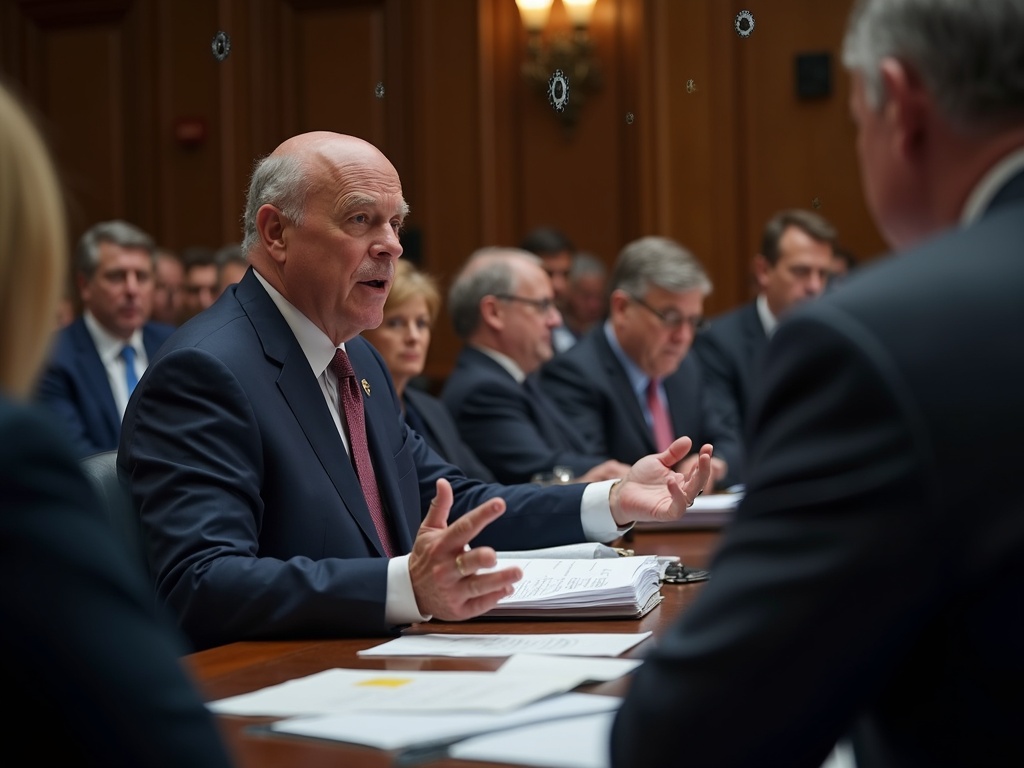
The Senate Banking Committee on Thursday took up the Clarity Act, a bill intended to define regulators’ authority over cryptocurrencies and settle when digital tokens qualify as securities, commodities or other assets. Lawmakers held a mark-up session to debate, amend and vote on whether to advance the legislation to the full Senate.
Republican committee chair Tim Scott framed the bill as neutral. “This legislation does not take sides between traditional finance and new technology, or Republicans and Democrats,” he said at the start of the hearing. Supporters say the measure would give long-sought legal clarity that could encourage wider adoption of digital assets in the United States.
The bill faces a steep hurdle: it needs at least seven Democrats on the committee to vote to advance it. Several Democrats oppose the current text, arguing its anti-money-laundering provisions are too weak and that it should bar elected officials from profiting from crypto ventures. Senator Elizabeth Warren, the committee’s top Democrat, warned the bill could put national security and the broader financial system at risk.
Industry groups and many crypto companies have lobbied heavily for the Clarity Act, saying regulatory uncertainty has hampered investment and innovation. The crypto sector spent more than $119 million backing pro-crypto candidates in 2024, according to public records, as part of an effort to secure passage of this bill and related measures. Lawmakers passed a separate law last year that set guardrails for dollar-backed stablecoins.
The Clarity Act also seeks to resolve disputes between crypto firms and banks that have delayed previous legislative efforts. Proponents say clearer rules would reduce friction with traditional financial institutions and make it easier for companies to operate under a defined regulatory framework.
Opponents counter that the bill tilts too far toward industry requests and does not give federal regulators sufficient tools to police illicit activity. They have pushed for tougher anti-money-laundering standards and additional ethics provisions aimed at preventing conflicts of interest among public officials.
The mark-up will show whether amendments can bridge those differences. If the committee advances the bill, it would still face debate on the Senate floor and potential further changes. Lawmakers also must weigh the bill’s implications for oversight between agencies such as the Securities and Exchange Commission, the Commodity Futures Trading Commission and bank regulators.
Thursday’s session marks a key test of whether bipartisan compromise on crypto oversight is possible as lawmakers try to reconcile industry demands with regulatory and national-security concerns.
You can read the original article here: https://www.investing.com/news/cryptocurrency-news/senate-panel-debates-crypto-regulation-bill-amid-partisan-divide-93CH-4689294