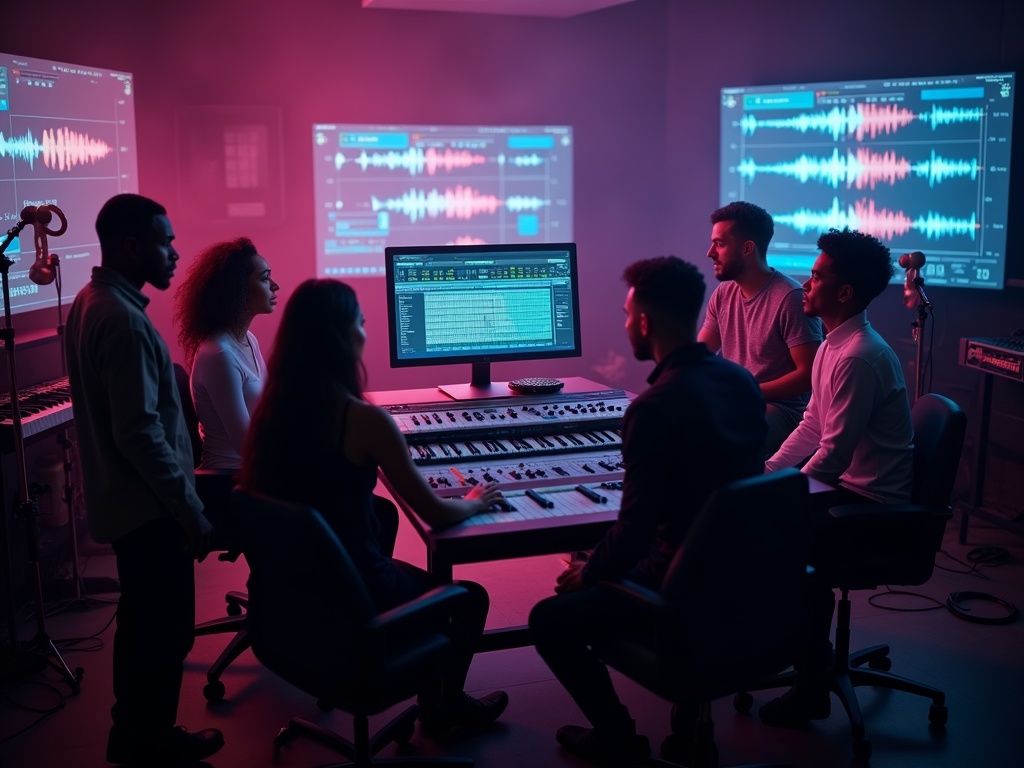
In a groundbreaking announcement, Google DeepMind has unveiled Lyria 3, its latest advancement in AI-powered music generation. Designed with input from producers and musicians, Lyria 3 aims to expand musical possibilities by enabling users to easily create high-fidelity tracks up to three minutes long. This innovation highlights DeepMind’s commitment to fusing technology with creativity, providing users with sophisticated tools to explore new musical horizons.
Lyria 3 stands out as Google DeepMind’s most advanced tool for music creation, offering users the ability to compose tracks using simple text prompts. The system is engineered to understand various aspects of musicality, including rhythm and arrangement, allowing both novices and experts to craft intricate compositions. With its powerful AI model, users can transform brief musical ideas into cohesive pieces, while possessing the ability to fine-tune details such as tempo, dynamics, and vocal styles.
One of the standout features of Lyria 3 is its adaptability. Users can generate vocals across numerous languages, covering genres from pop to funk, and even Motown. This diversity not only broadens the creative palette of users but also democratizes music production by ensuring that linguistic and stylistic barriers do not hinder creative expression.
Google DeepMind has integrated advanced capabilities into Lyria 3 that allow for composition with images, converting visual content into unique musical tracks. This feature sets Lyria 3 apart as a versatile tool in the world of AI-generated music, providing unprecedented freedom for artistic experimentation.
In collaboration with artists and industry experts like Wyclef Jean, DeepMind aims to ensure that Lyria 3 complements rather than replaces human creativity. These partnerships have been instrumental in shaping the application and addressing concerns around AI in artistic processes, ensuring that it enhances, rather than detracts from, human contribution to the arts.
Safety and responsibility remain core principles for Google DeepMind as it navigates the integration of AI into creative fields. Lyria 3 comes equipped with SynthID watermarking technology to ensure transparency regarding AI-generated content. This feature underscores DeepMind’s commitment to ethical AI deployment, aiming to safeguard creators while expanding the tool’s potential applications.
Lyria 3’s launch marks a significant step forward in AI-driven music creation, promising to serve as a powerful collaborative partner for musicians worldwide. As Google DeepMind continues to refine its AI models, Lyria 3 is poised to reshape the landscape of digital music production, offering exciting possibilities for creators across the globe.
You can read the original article here: [https://deepmind.google/models/lyria/](https://deepmind.google/models/lyria/)

